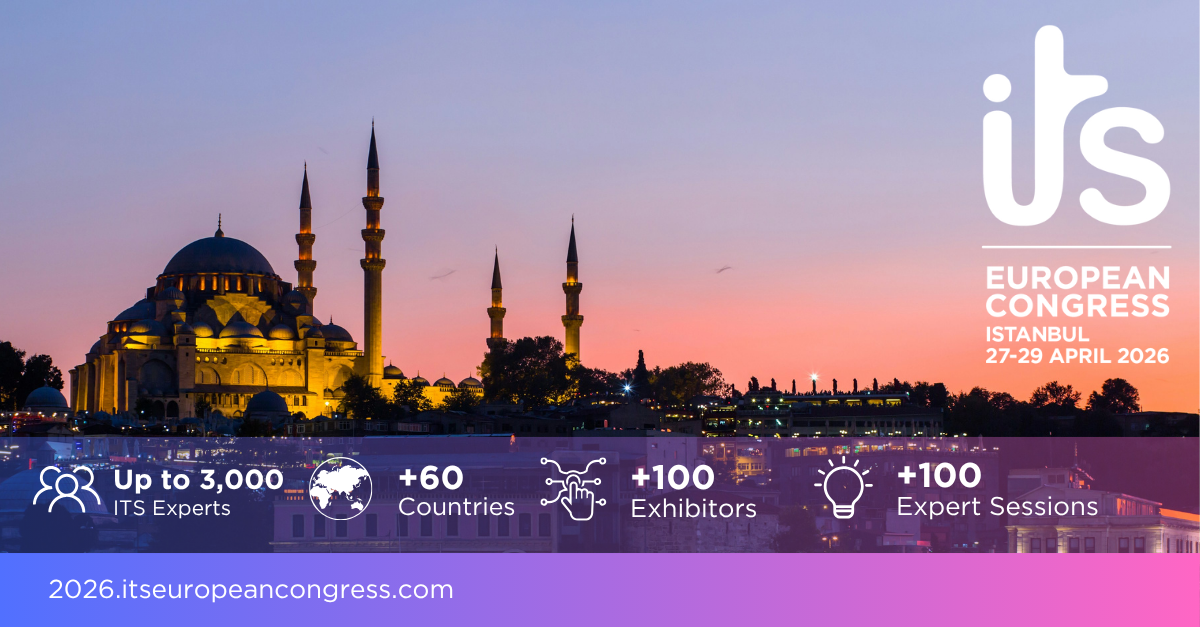
Den 17. ITS European Congress 2026 samler hele transport- og mobilitetsøkosystemet i en by som illustrerer årets tema: Bridging innovation: Integrated, safe and seamless mobility.
Vi både arrangerer og deltar i flere sesjoner og paneler, og ser frem til å løfte frem norske og nordiske perspektiver og bygge relasjoner.
Skal du på konferansen? Vi tilbyr rabatterte konferansepass*.
Ta kontakt med oss for mer informasjon! *Kun for medlemmer av ITS Norway
Dette er sesjonene vi er med på:
Europe’s transport future lies in seamless multimodality. This Special Interest Session explores how Europe can unlock the full potential of maritime ITS, connecting maritime transport much more tightly with road and other land-based modes. Instead of treating ships and trucks as separate worlds, the session looks at end-to-end freight corridors – from deep-sea and short-sea services, via terminals and logistics hubs, to hinterland distribution.
Digital technologies, common data standards and automation now make it possible to plan and execute door-to-door journeys as one coordinated system. Real-time information on sailing plans, truck slots, congestion and disruptions can be shared across actors so that vessels, vehicles and terminals adapt together. This reduces waiting times, empty runs and emissions, while improving reliability for cargo owners.
Drawing on experiences from several EU projects, the session demonstrates how smarter coordination between sea and land transport is being tested in real corridors and what this implies for policy, regulation, and business models. Istanbul – a historic bridge between continents and trade routes – provides a natural backdrop for discussing how Europe can design similar “smart corridors” that cross borders and modes.
The session is targeted at stakeholders and policymakers seeking a practical, system-level view on how to connect sea and land transport in a way that is cleaner, more resilient and economically attractive.
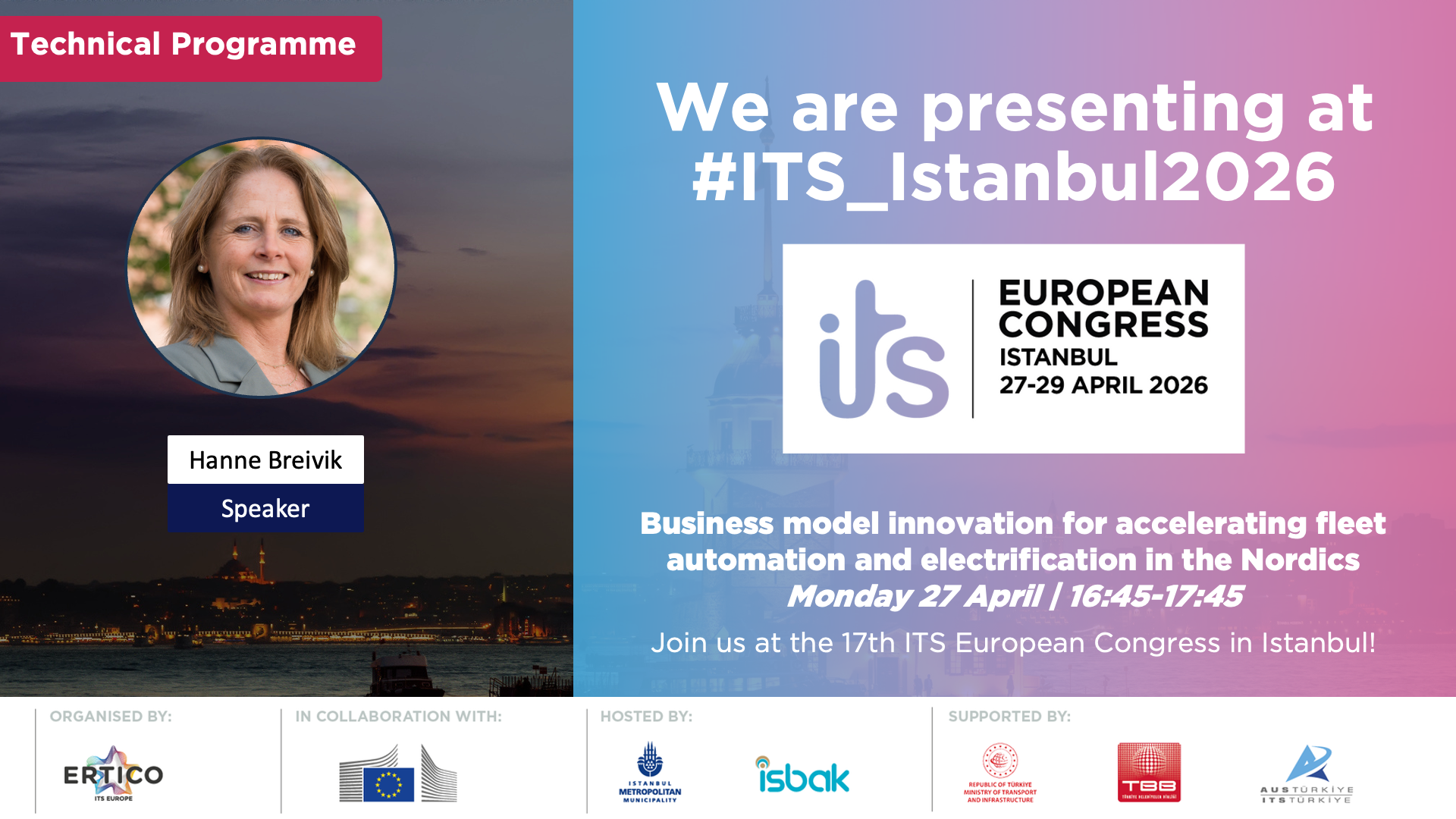
Europe’s transition toward net-zero transport requires rapid electrification and automation of heavy-duty fleets. Achieving this ambition depends not only on technological advances but on rethinking how value
is created and shared across interconnected actors in the emerging mobility ecosystem. In line with the Congress theme, innovation, this session highlights the need to move beyond technical innovations and address business model innovation as a crucial yet often underestimated enabler. By focusing on new value creation logic and collaborative structures, the discussion aims to uncover what is needed to scale automated and electrified fleets across Europe and the Nordic region.
Europe provides an ideal environment for pioneering integrated mobility solutions, combining renewable energy generation, advanced data infrastructure, and strong collaborative governance traditions. Yet, significant barriers persist, such as limited interoperability, misaligned incentives, and high system-level investment costs. Overcoming these challenges requires business model innovation that links key actors within mobility ecosystem.
The session brings together experts from academia and industry to explore forward-looking opportunities for ecosystem-based innovation that could shape the next decade of automated and electrified heavy transport. Instead of reviewing completed projects, the discussion will focus on long-term questions: How can business model innovation open new pathways for accelerating automation and electrification across Europe? What innovative business models might companies adopt as mobility ecosystem emerges? How should long-term corporate strategies be reimagined to support future mobility transitions? What governance and value-sharing arrangements could unlock sustainable and competitive ecosystem growth?
Participants will also examine the convergence of several industries, highlighting new interdependencies among energy, transport, data and ICT, and how this integration can improve efficiency and reduce environmental impact.
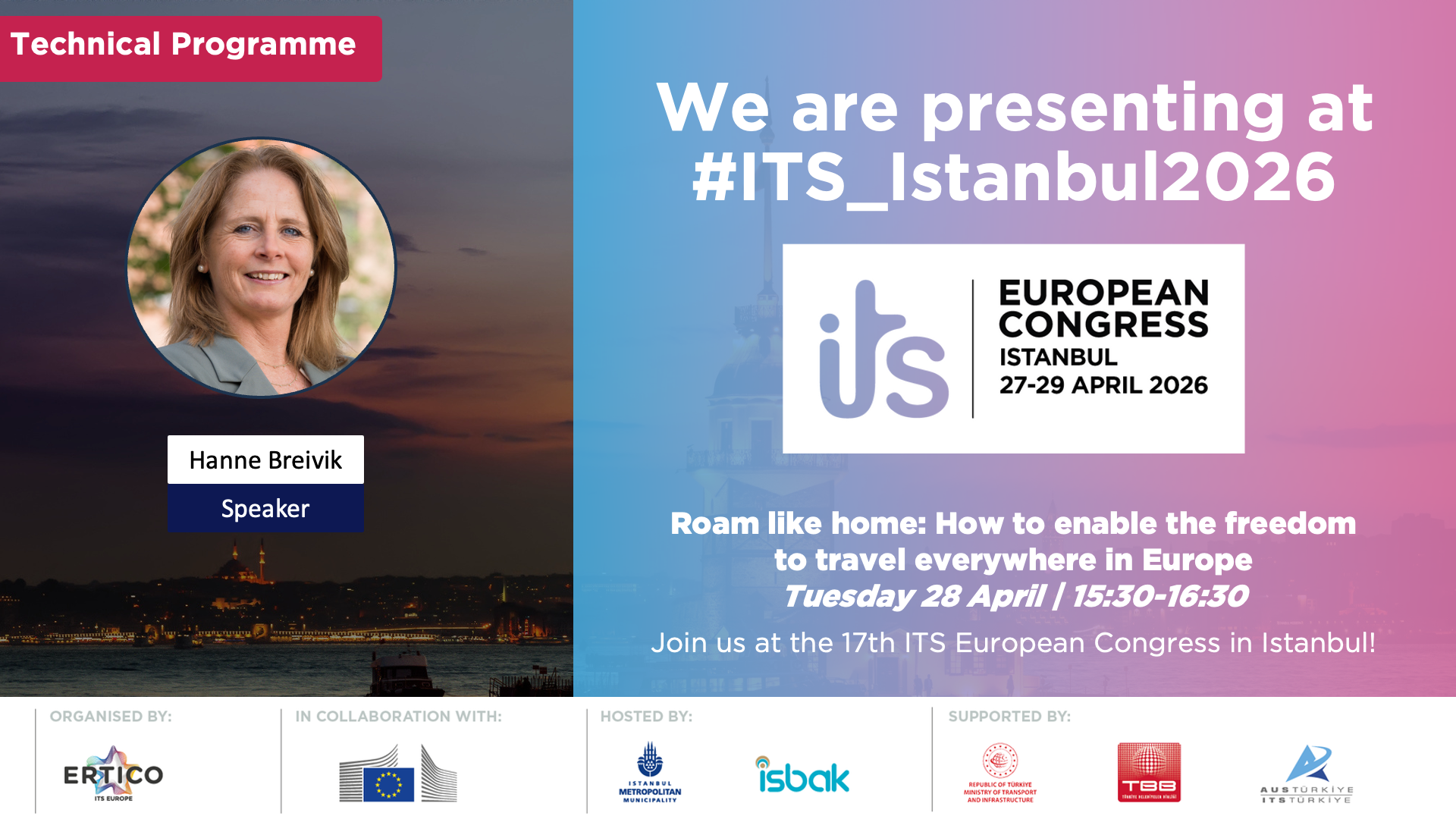
How do you make it as easy to plan, book and pay for a cross-border journey by train, bus or ferry as it is to navigate by car or book a flight?
The Nordic Ecosystem Mobility Unlimited (NEMU) project demonstrates a practical answer: regulated open mobility data published through National Access Points (NAPs), combined with open-source tools, can deliver “roam like home” multimodal travel across regional and national borders.
This hands-on workshop brings together policy makers, mobility platform providers, public transport authorities and operators, and transport innovators to:
(1) showcase NEMU demonstrations from four Nordic countries,
(2) explain the technical and regulatory link from NAPs to multimodal planning/booking/payment, and
(3) co-design actionable steps for replication across Europe.
Participants will leave with ready-to-use strategies, open tools and concrete next steps to accelerate seamless, sustainable and fair multimodal travel in line with EU objectives for green, connected mobility. This session directly addresses the Congress themes of integrated, multimodal mobility and smart sustainable transport.
How can national innovation ecosystems work together to accelerate smarter, more resilient transport and mobility across Europe? Drawing on perspectives from European ITS networks, this session examines how national initiatives can scale into cross-border solutions that address shared mobility, sustainability, and digitalisation challenges.
Representatives from the ITS Nationals Network, the 30 ITS organisations from across Europe, will explore projects and collaborations across the continent. ITS Austria, ITS Norway, Hellas and ITS Finland, ITS Germany will discuss how they are supporting the advancement of transport technology in their respective countries and across borders through collaboration. The need for common standards for enabling seamless mobility between countries, and the importance of collaboration to strengthen system reliability in times of disruption will be highlighted.
Key themes will include the integration of multimodal services and Cooperative ITS with public transport systems and accessibility solutions in improving user experience; the role of industry associations in supporting small and medium-sized enterprises seeking to expand internationally; and the role of cross-border cooperation as an opportunity for innovation and market creation, and as a strategic response to shifting geopolitical realities.
As European mobility systems evolve toward greater automation, multimodality, and real-time responsiveness, the integration of dataspaces and AI has become both a critical enabler and a significant challenge. This session explores emerging opportunities in building trustworthy, interoperable, and intelligence-ready data ecosystems for next-generation transport and mobility management data ecosystem.
Experts will highlight practical obstacles of adapting heterogeneous, cross-sectoral datasets for mobility-focused AI applications, including data quality, semantic alignment, governance, and scaling across sectors. The session will examine how AI models and AI-driven analytics reshape transport and mobility management by transforming complex, multisource data into operational insights—while raising questions around transparency, validation, cybersecurity, and human oversight.
Building on best practices and use cases from projects throughout Europe, the path towards a Next-Generation Multimodal Transport and Mobility Management will be discussed: an active intelligence layer coupling sovereign data sharing with embedded AI models and services for dynamic routing, demand prediction and socially optimal traffic control.
Participants will gain a realistic understanding of the technical, regulatory, and organisational hurdles that must be addressed to unlock equitable, predictive, and sustainable mobility management across Europe, while exploring how human-centric AI can support—and be shaped by—evolving needs, skills, and responsibilities of mobility professionals.
What to expect in 2026
The 17th ITS European Congress will offer three days of insight, dialogue and engagement across multiple content pillars:
- 3000+ attendees.
- 100+ sessions.
- 140+ exhibitors.
- 55% private sector and 45% public sector.
- High-Level Programme: Where high-level public and private leaders debate the future of European mobility.
- Technical Programme: Presentations and discussions featuring real-world use cases, research, and deployment stories.
- ITS Arena: Connecting buyers and decision-makers with solutions, from emerging players to market leaders.
- Exhibition & Demonstrations: A live stage for transport technologies in action—on the show floor and in the streets of Istanbul.
Join Europe’s leading event for Intelligent Transport Systems (ITS) – Where mobility, technology, and policy converge!