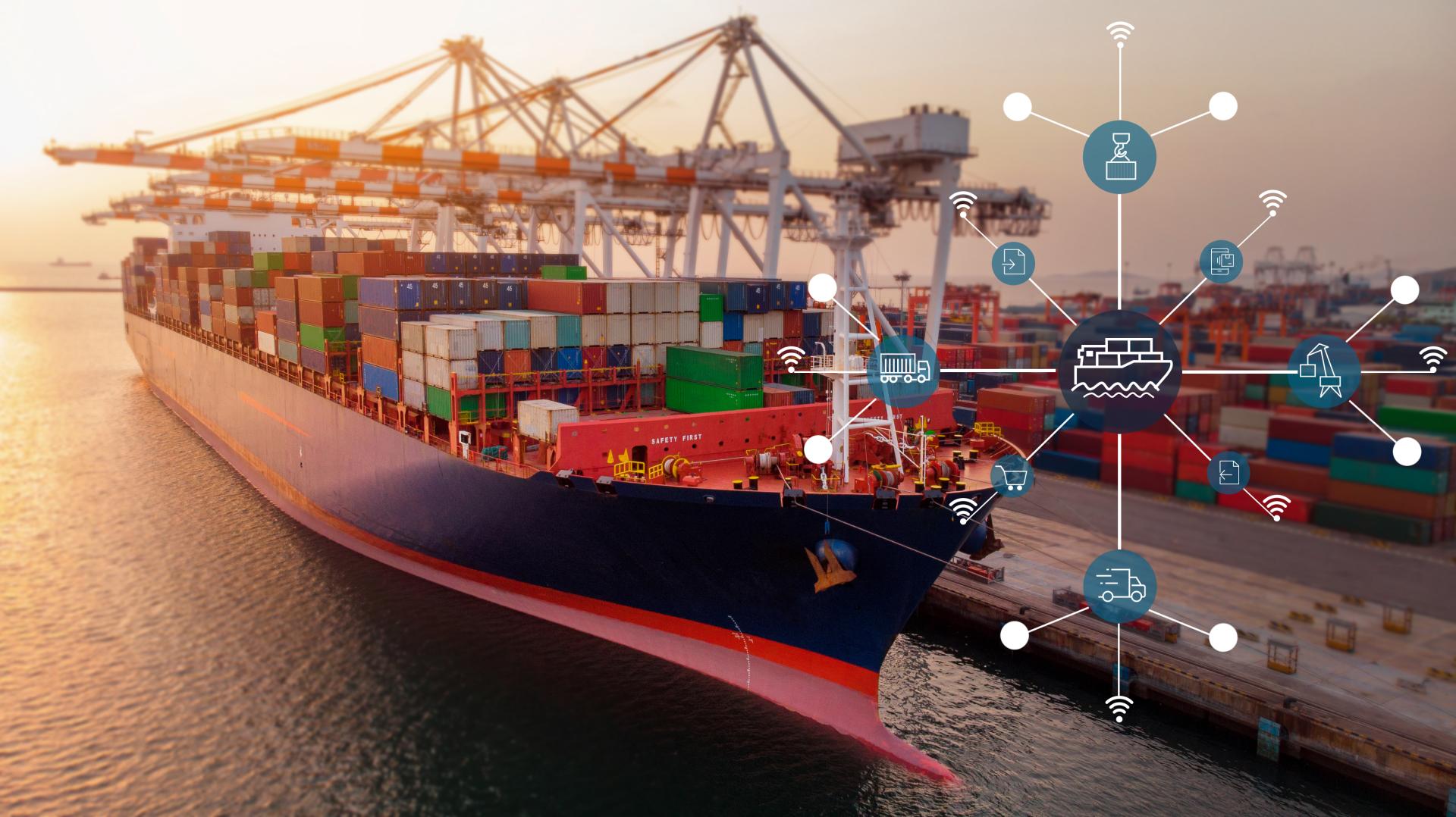
A port call concept facilitating Just-In-Time ship-port operations
Paving the way and demonstrating how future port calls can be designed to be more efficient, sustainable, and resilient.
Port calls sit at the heart of maritime transport, yet the way they are coordinated today remains a significant source of inefficiency and avoidable emissions.
Ships frequently race to port only to wait at anchor for hours or days — a costly, emission-intensive buffer driven by fragmented communication, outdated or unshared timestamps, and a first-come-first-served culture.
Most ports still often rely on bilateral phone calls, emails and siloed IT systems, with mostly only the ETA officially exchanged, while more useful coordination points go unused.
This webinar presents the DYNAPORT Blueprint of Port Call Processes: a structured reference model for optimising and harmonising how ships, terminals, authorities and service providers coordinate a port call from planning through execution to follow-up.
We will walk through the blueprint’s architecture — its five phases (pre-arrival, port arrival, berth visit, port departure, post-departure), its three layers (operations, P3C coordination, and contracts & regulations), and the core enablers that make coordination work in practice, including a standardised set of timestamps built on the Estimated → Requested → Planned → Actual framework.
A central focus is the P3C, a conceptual coordination function that acts as the intermediary between ship side and port side — collecting and sharing information, synchronising planning on real-time data, and replacing redundant parallel exchanges with a single source of truth.
We will show how this approach enables Just-In-Time arrival, aligning ships’ speed with actual berth and service availability, and how it maps directly onto IMO guidance (FAL.5/Circ.52) and established standards.
Crucially, this is also a climate and efficiency story. Studies cited in the work point to meaningful fuel and CO₂ reductions when arrivals are coordinated — on the order of 14% per container voyage with full-voyage speed optimisation, and measurable savings even when Just-In-Time planning is applied only in the final hours before arrival.
The session will connect these operational changes to their environmental and economic benefits, and close by illustrating the blueprint in action through the port call protocols that handle single and multiple terminal and berthing scenarios.